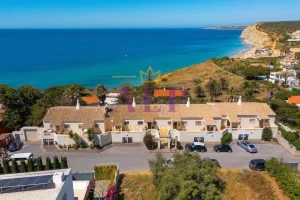
What the End of Spain’s Golden Visa Means for Lagos, Portugal’s Real Estate Landscape
In April 2025, Spain officially ended its Golden Visa program, which had allowed non-EU investors to gain residency through property purchases of €500,000 or more. This move, aimed at curbing housing market pressures and addressing affordability concerns in cities like Madrid and Barcelona, has significant implications for neighbouring countries, including Portugal and more specific markets like the Lagos Portugal real estate landscape (Source).
Portugal’s Golden Visa
Portugal had already taken a similar step in October 2023 by removing real estate investment as a qualifying criterion for its Golden Visa program. This decision was part of the “Mais Habitação” law, designed to tackle the country’s housing crisis by increasing availability and affordability. Consequently, foreign demand for luxury properties in Portugal saw a notable decline. By early 2024, international interest in homes priced over €1 million dropped to 22.8%, the lowest level since 2021(Source).
Lagos, Algarve
Lagos, a popular area in the Western Algarve region, has traditionally attracted foreign investors and retirees. With the cessation of Golden Visa-linked real estate investments, the town is witnessing a shift in its property market dynamics.
Rise of Digital Nomads
Portugal’s introduction of the D7 visa, targeting remote workers and retirees with stable incomes, has positioned Lagos as an appealing destination for digital nomads. The town’s excellent internet connectivity, co-working spaces, and quality of life are drawing a new demographic of residents (Source).
Property Market Outlook
Despite the decline in luxury property demand, the overall real estate market in Lagos remains resilient. Factors such as ongoing urbanisation, infrastructure development and limited land availability are expected to drive property prices upward. Projections indicate a potential increase of 5% to 10% in property values in 2025 (Source).
Broader Implications
The end of Golden Visa programs in both Spain and Portugal signifies a broader European trend of reevaluating residency-by-investment schemes. While these programs have attracted significant foreign capital, concerns over housing affordability and market distortions have prompted policy shifts (Source).
For Lagos, this transition presents both challenges and opportunities. The town is poised to redefine its real estate landscape by catering to digital nomads, promoting sustainable tourism, and focusing on long-term residents. This strategic pivot could ensure a more balanced and inclusive growth trajectory for the local community (Source).